Case Study
REN.PH: The Real Estate Data Layer AI Engines Cite
238,203 government zonal value rows and 25,255 PRC-verified brokers, structured down to the barangay. On long-tail location queries, Google AI Overviews, ChatGPT, and Perplexity frequently cite REN.PH, often as the only source.
What AI engines actually cite
Across the queries I have tested, REN.PH is frequently cited by AI engines, and on long-tail barangay queries it is often the only source cited, because most competitors stop at the city level. This is a consistent pattern, not total coverage. On city-level head terms the answers are contested, and REN.PH appears alongside other sources. I have not tested all 38,000+ barangays. These are dated samples, and citation results vary by engine, phrasing, and run.
Dated samples from logged-out sessions. AI answers are non-deterministic and vary by run, so your result may differ. I measure citation frequency over time, not single outcomes.
The traffic outcome
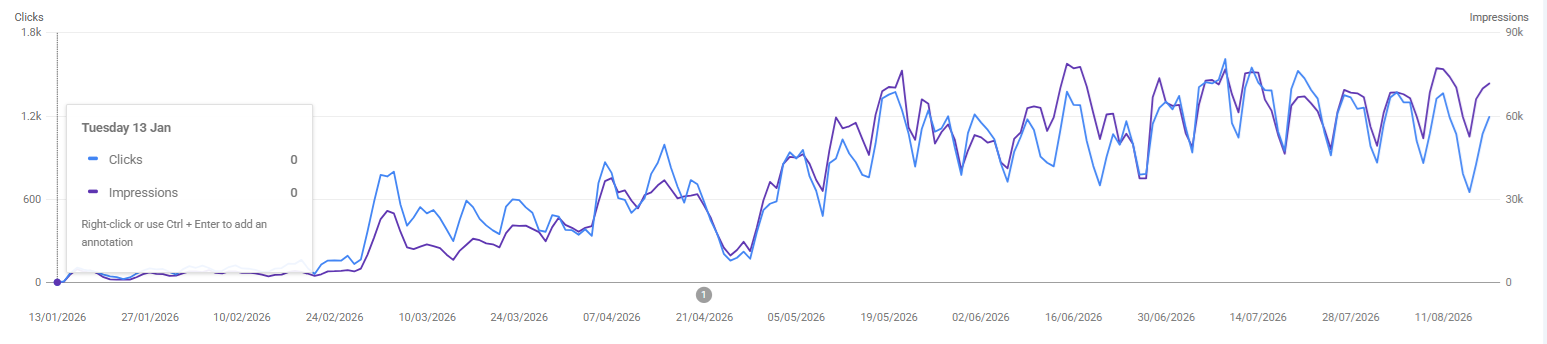
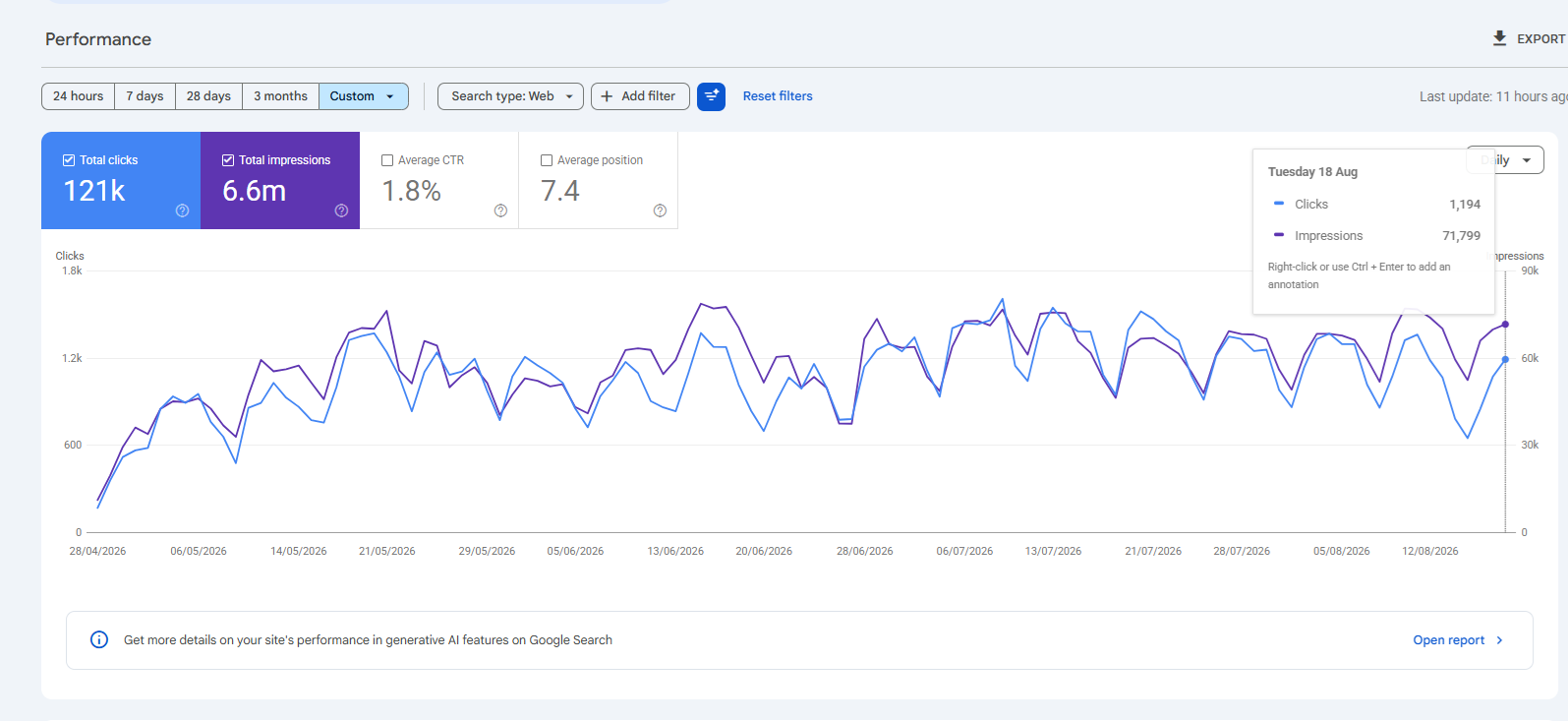
Six months of Google Search Console data for ren.ph: 156,000 clicks between 13 January and 18 August 2026, from a base of zero. In the clean window after Google's 28 April logging fix, 121,293 of those clicks came on 6.6 million impressions, a 1.8 percent average CTR and an average position of 7.4. The curve is the compounding effect of data that engines and searchers keep reaching for.
The citation proof
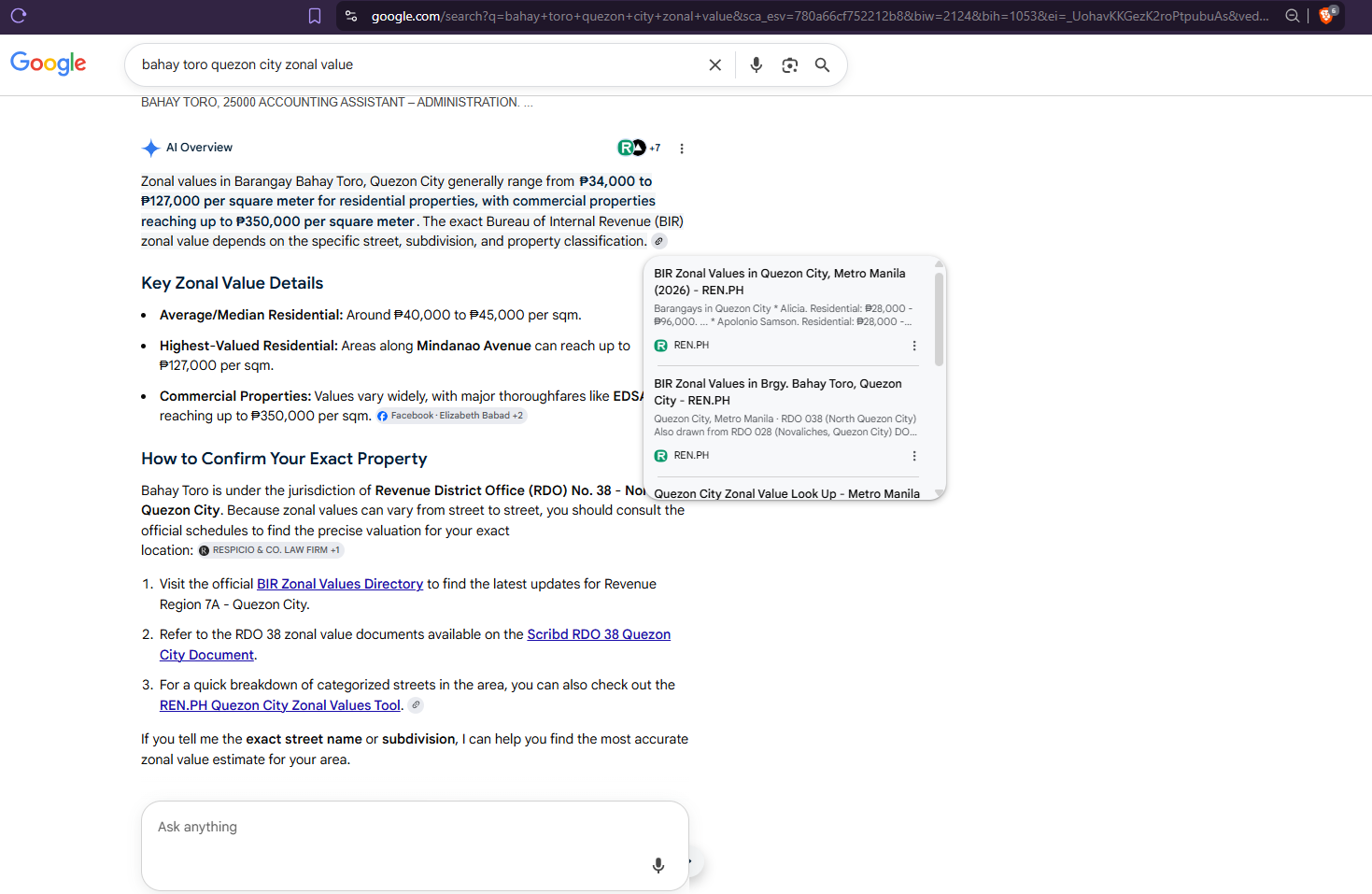
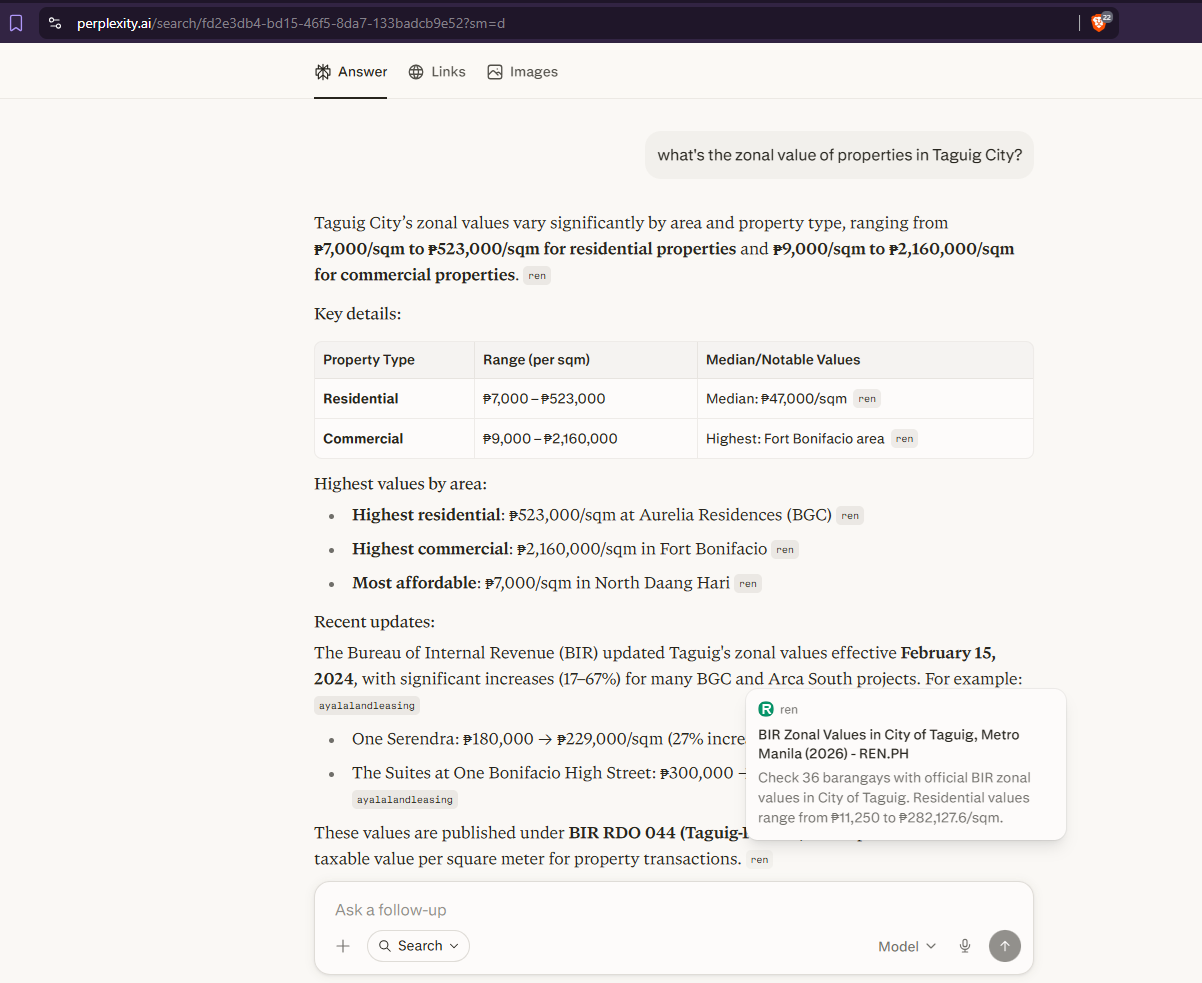
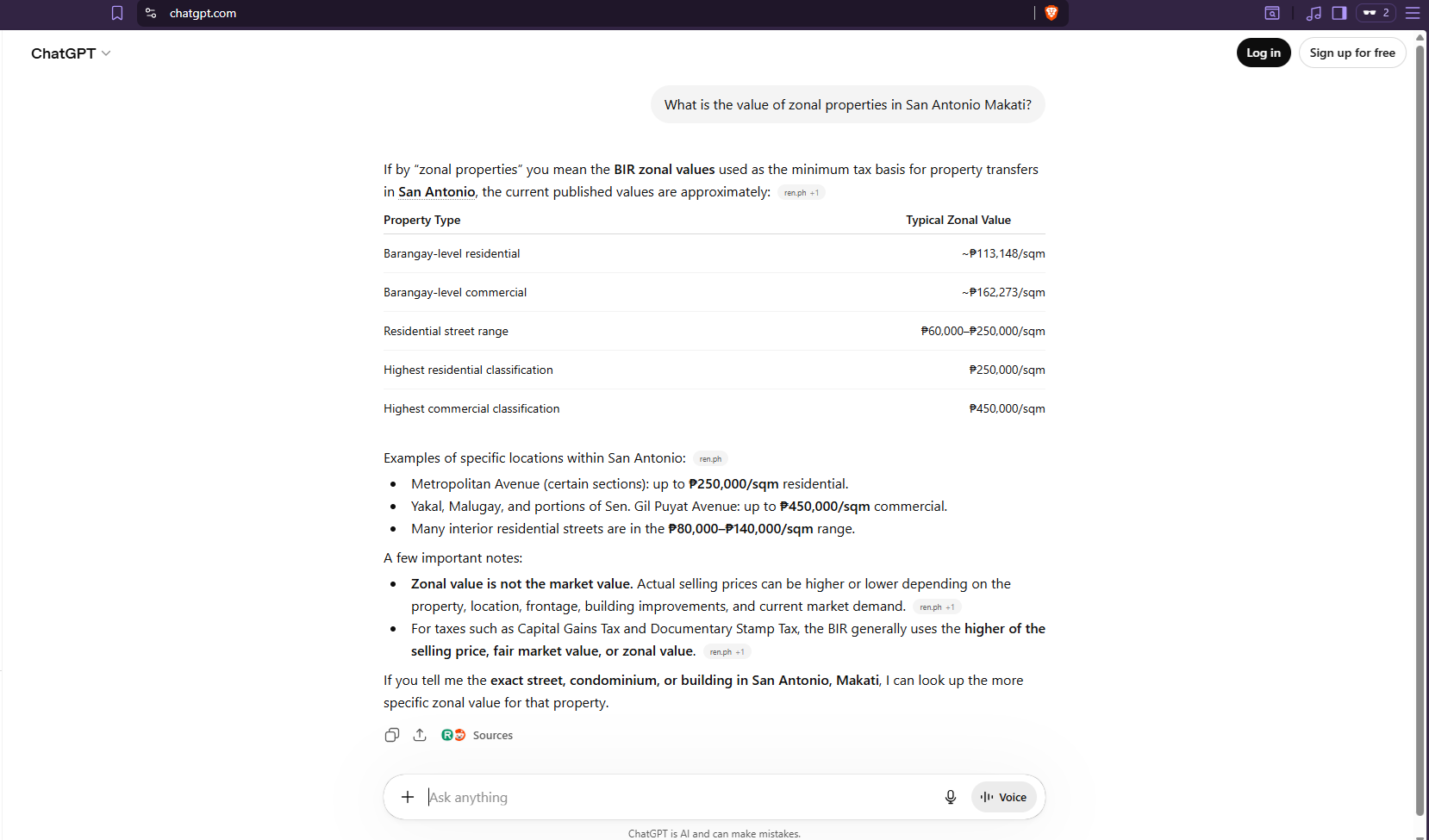
The same data shows up inside the answers themselves. Three of the four major AI surfaces, captured on barangay and street-level queries where the answer needs a specific number.
Google AI Overview on a Bahay Toro, Quezon City query
Perplexity on a Taguig City query
ChatGPT on a San Antonio, Makati query
ChatGPT on an Immaculate Concepcion, Quezon City query
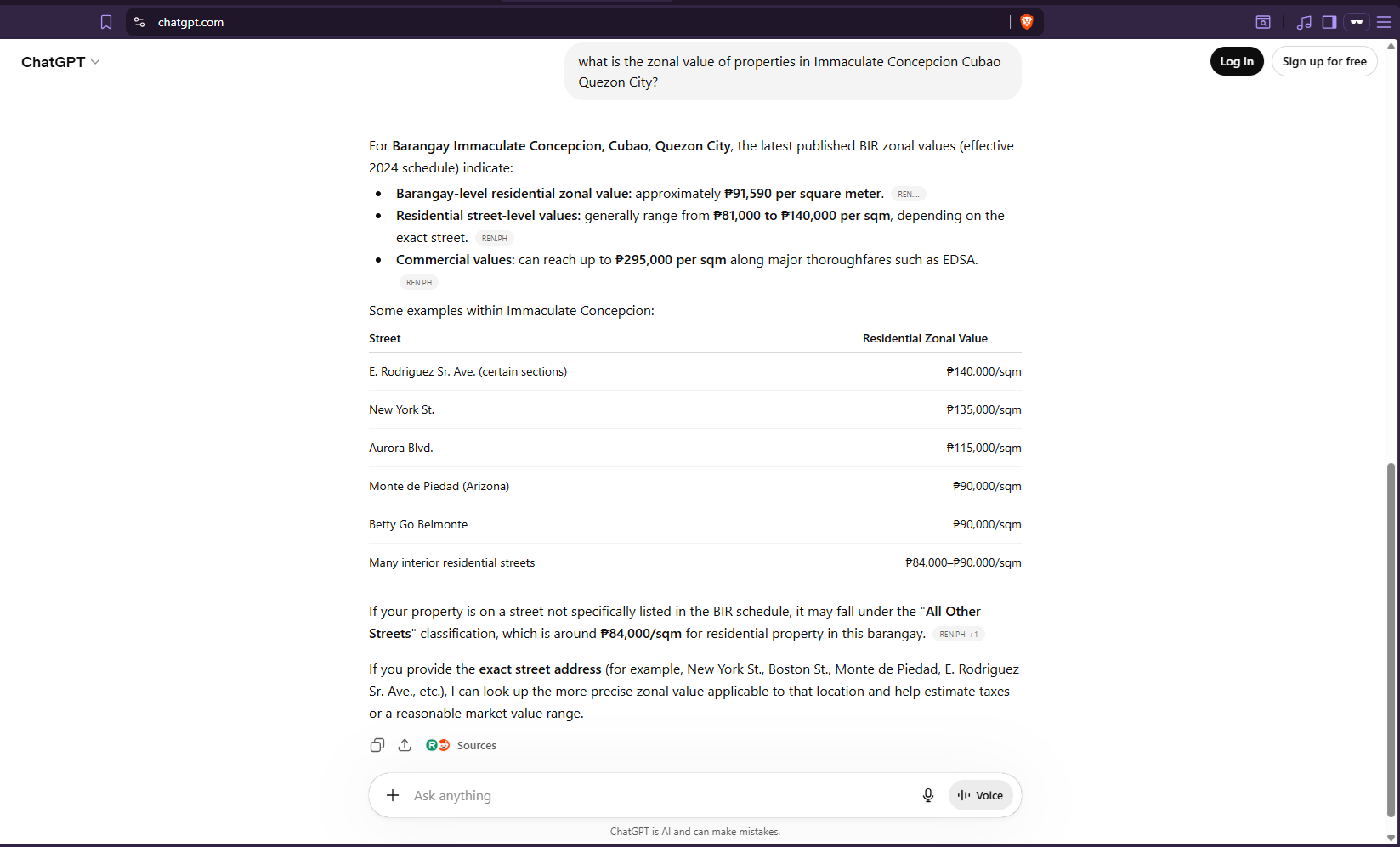
The pattern across the set: when the question gets specific enough to need a real number, the engine reaches for the page that owns that number. Below the city level, that page is usually REN.PH.
Where the data came from
Philippine real estate data existed. Access did not.
- •Zonal values: Buried in BIR Excel files, organized by RDO
- •Brokers: One-by-one lookup on PRC
- •License to Sell: Slow, legacy DHSUD interface
- •Alternatives: Clunky tools flooded with ads
Three agencies, three formats, no unified access. The work was getting it clean enough to trust.
How the data got clean enough to trust
I built REN.PH with a system of AI agents, each handing off to the next. The point was never the automation. It was that every figure had to be defensible against its government source before it went live.
Architect Agent
Orchestrates the workflow
Research Agent
Gathers data from source records
Normalizer Agent
Structures and standardizes
Validator Agent
Cross-checks each value against its source
Publisher Agent
Deploys to production, page by page
The Validator step is the one that matters for everything downstream. It cross-checks each value against the source record and ties it to the PSGC code and the BIR Department Order it came from. That grounding is why the data is citable: an engine can trace a barangay figure back to an official document, which is the trust signal it needs to cite a source rather than assemble an answer from fragments. This is Algorithmic Integrity in practice.
Why engines cite it
AI engines rewrite a question into smaller ones, retrieve passage-sized chunks to answer each, and attach a citation claim by claim. A page wins the citation when it is the lowest-risk way to ground a specific claim. I wrote out the full pipeline in Retrieval, Not Rankings.
REN.PH is built to be that lowest-risk option. Each barangay figure is specific, sourced to a PSGC code and a BIR Department Order, current, and structured on its own page. When someone asks for the zonal value of a specific barangay, the engine does not have to assemble anything. It has a source that owns the claim, so it cites it.
The opposite case is what happens when no page owns the answer. I traced one of those: an AI Overview that gave a confident, sourced number for a market with no real data behind it, and the cited page did not even contain the figure. I wrote that up in I Clicked the Citations on an AI Answer. The difference between the two is information gain: REN.PH gives the engine something specific and verifiable to cite, so the fabrication has nowhere to form.
The numbers
Live production coverage, verified 21 August 2026. As of the June 2026 grounding pass, 35,743 of the barangay rows were grounded to their PSGC code.
| Entity | Live count |
|---|---|
| Zonal value rows | 238,203 |
| Barangays covered | 38,272 |
| Cities and municipalities | 1,601 |
| Provinces covered | 81 |
| Regions | 16 |
| PRC-verified broker profiles | 25,255 |
Data verified as of August 21, 2026, counted against the live ren.ph sitemaps and the zonal value stats panel. Counts are operational database coverage and shift as records are re-grounded; figures used in marketing copy may round these down. Provinces covered is 81 rather than 82: ren.ph publishes 82 province-level pages, one of which is Metro Manila, and Aurora currently has no BIR zonal data.
What this means for you
The same approach that earns REN.PH its citations applies to any workflow that turns messy source data into something an engine, or a customer, can trust:
If it needs to be accurate, current, and defensible at scale, this is the build pattern.
Deep dive: the methodology
Read the full Integrity Gap whitepaper to see how Algorithmic Integrity enables Answer Engine Optimization.
Want this for your data?
Explore the AI search visibility services or read the realestateseo.ph case study.